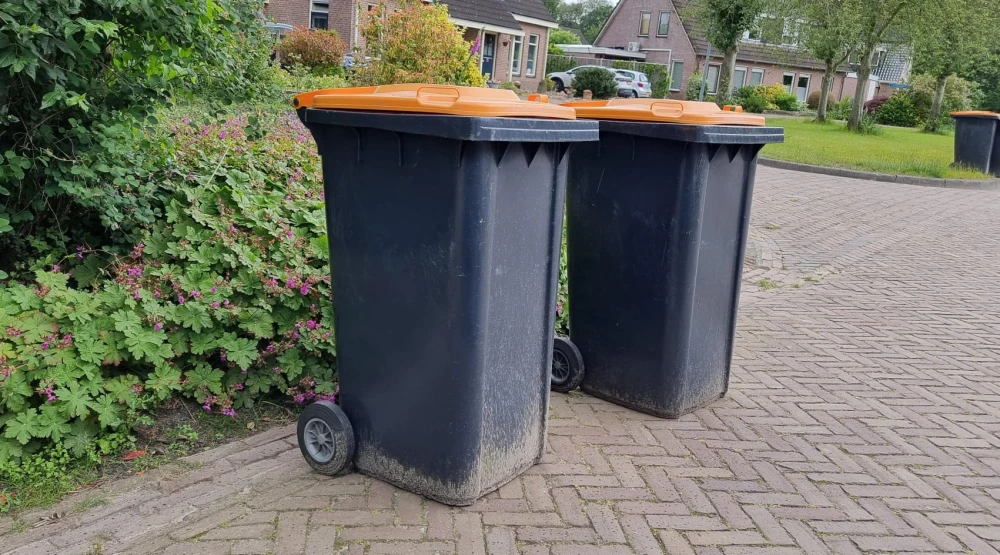
The municipality of Aa en Hunze is fitting all green, grey and orange wheelie bins with a chip and a barcode, linked to the home address. On every collection round, an estimated 1,300 bins are put out on the street that do not belong there.
This is reported by the regional broadcaster RTV Drenthe and the regional daily Dagblad van het Noorden. The bins that do not belong there account for 450 tonnes of extra waste a year and cost the municipality an extra €62,000 annually. "There are bins that are emptied several times and bins in use for which no waste charge is paid," says alderman Richard Heling.
Often it is a free second bin, for nappies for example, which people forget to hand back once they no longer need it. Bins are also bought on sites such as Marktplaats, and bins from surrounding municipalities are secretly brought across the border into Aa en Hunze.
When the bin lorry lifts a bin, the chip and the barcode are read. That way the system can see whether the bin has already been emptied and whether it actually belongs to Aa en Hunze. The weight is not recorded: there is no plan to introduce diftar, a system in which you pay per kilo of waste. According to Heling, residents' privacy is not at stake, because the chip is linked only to the home address and contains no personal data.
The chipping is expected to take another six weeks. The new system comes into force on 1 January 2025. The municipality hopes it will save 8 to 10 euros per household per year. By 2027 it aims to reach the national target of 100 kilos of residual waste per resident per year.