
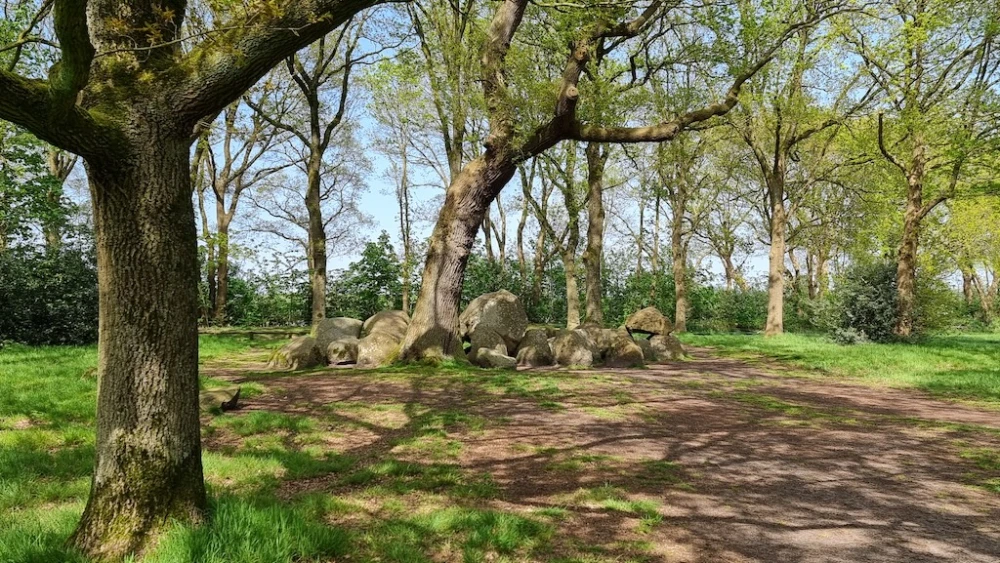
Dolmen D18
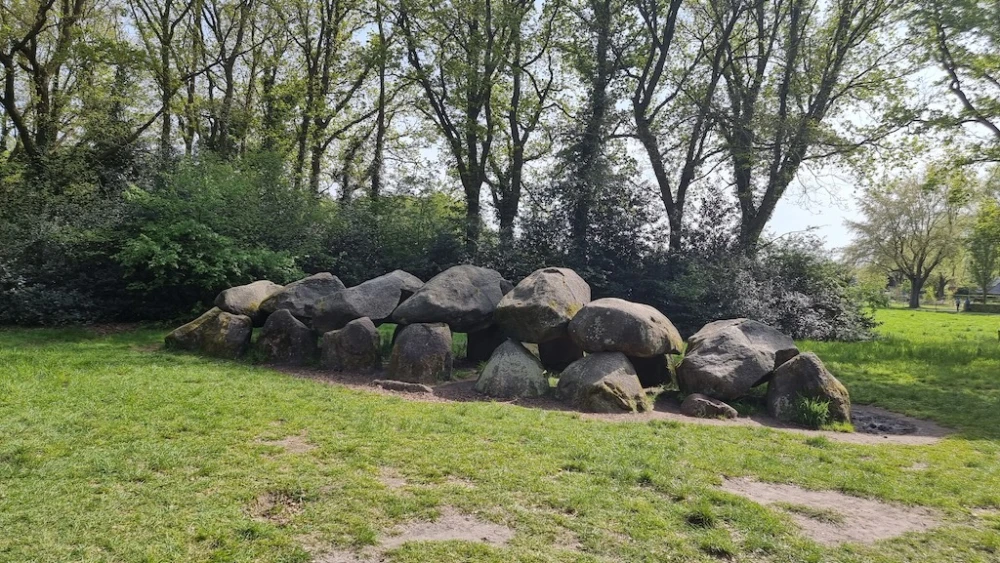
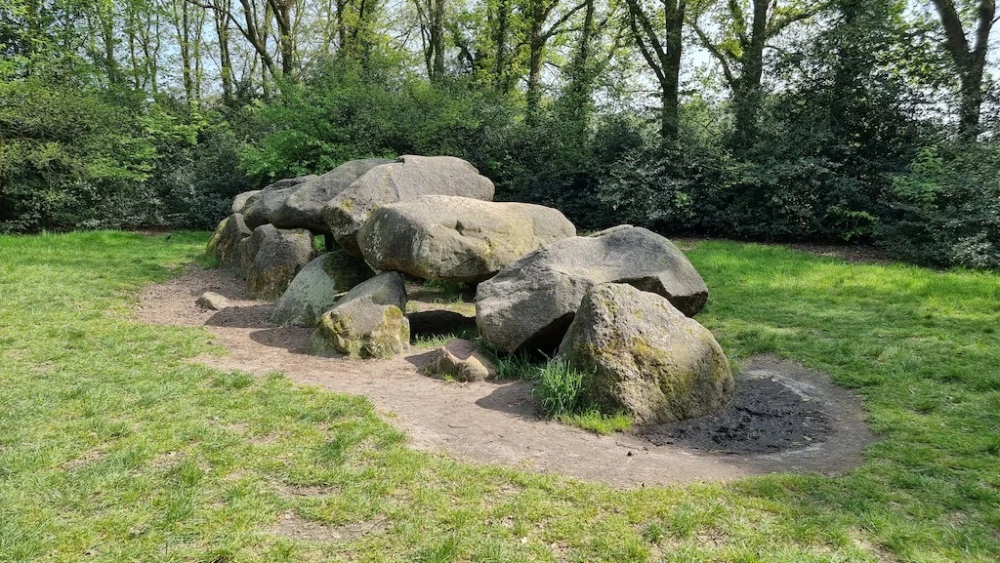
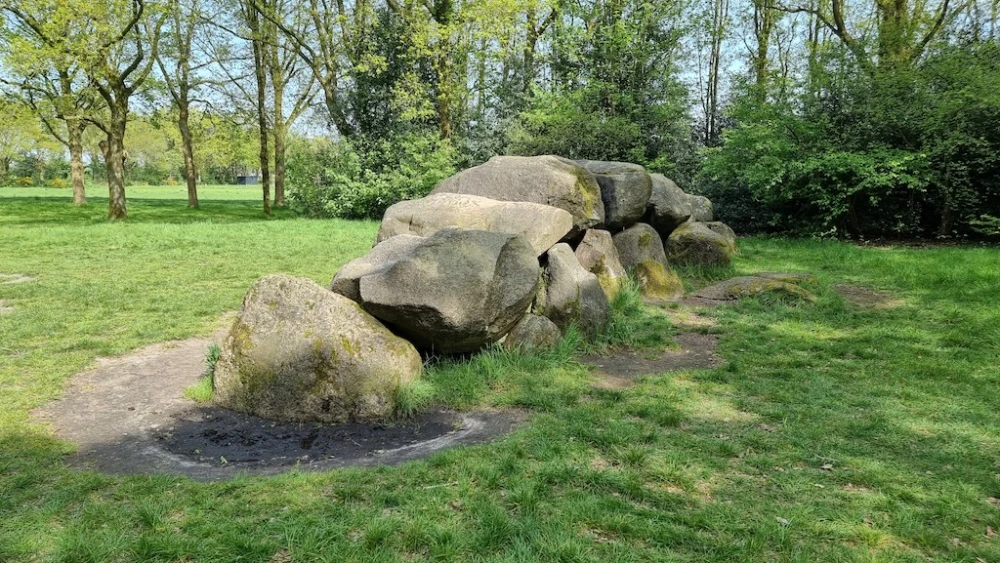
A passage grave around 5,000 years old on the northern edge of Rolde, close to dolmen D17. Unlike D17, all its capstones still rest on the uprights.
D18, also known as Rolde Zuid, lies on the es, the village's old arable field, on the northern edge of Rolde, directly west of the churchyard by the Jacobuskerk. Dolmen D17 is about 60 metres further north.
The burial chamber is 12.6 metres long and 3.5 metres wide and runs roughly from east to west. Seven pairs of uprights stand along the long sides, with an end stone at each short side, and seven capstones rest on top. Halfway along one long side, two stones form the entrance, a short passage into the chamber. The chamber was once covered by a mound of earth and stones; that has gone, so today you see the bare boulders.
The dolmen was built by people of the Funnel Beaker culture, who lived here in the Neolithic. Drenthe has 52 dolmens, and they are among the oldest monuments in the Netherlands. That they were graves is certain: remains of burnt bone from one person were found in D18. We do not know which rituals went with them.
As early as 1547, Antonius Schonhovius wrote about a dolmen near Rolde, but which of the two he meant is not known. Before 1818, pottery sherds were found in D18 during unofficial digging. The Rolde dolmens were restored in 1873, 1931, 1936, 1954, 1965 and 1993, and they have been listed national monuments since 1992.
The dolmen is freely accessible and there are information boards. Dolmen D16 near Balloo is just over 2 kilometres to the west, and walking and cycling routes pass more prehistoric sites in the area.