Balloërkuil
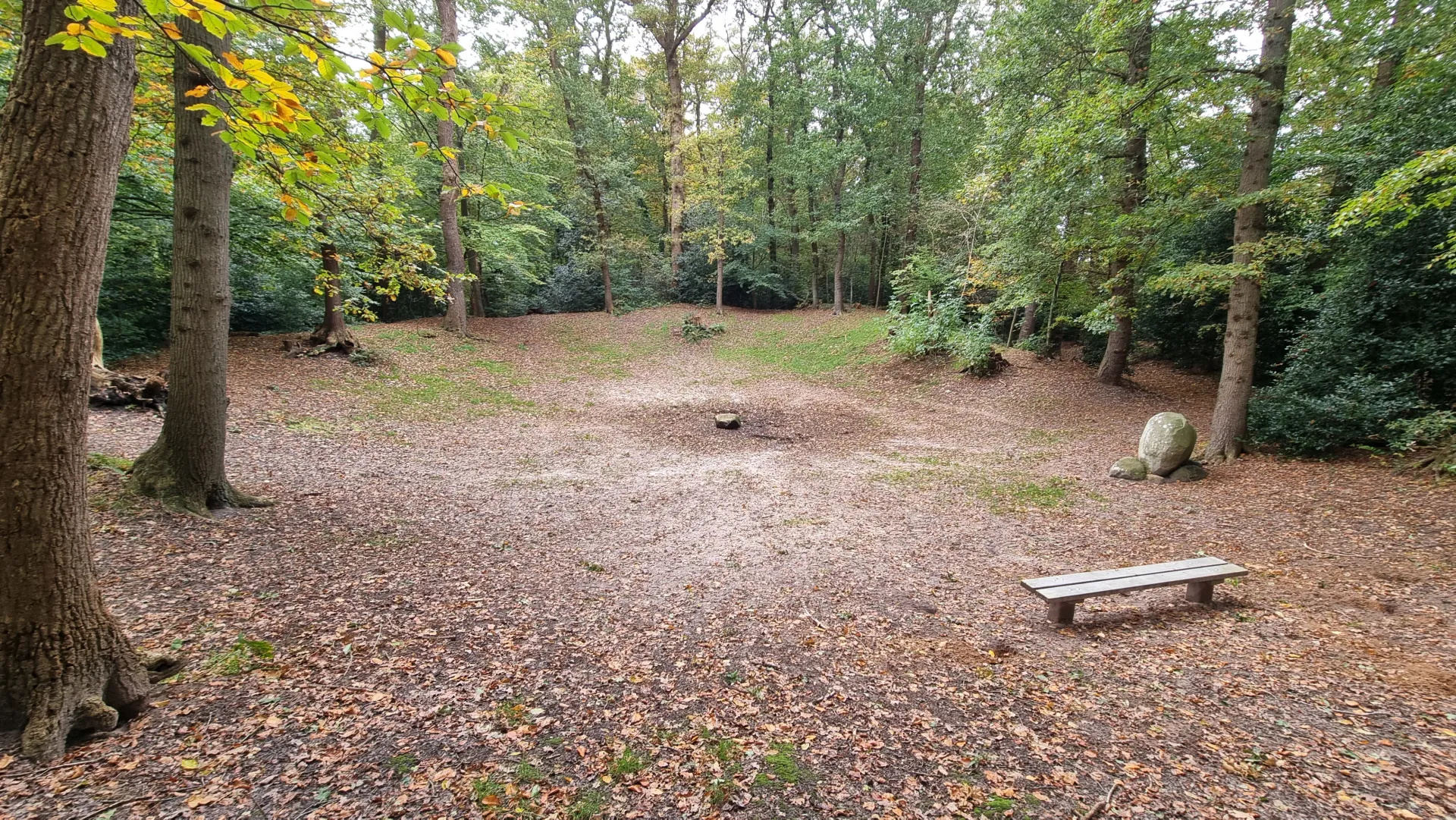
A natural hollow in the woodland between Rolde and Balloo, known for stories about the Drenthe Etstoel. There is no proof that this court met here.
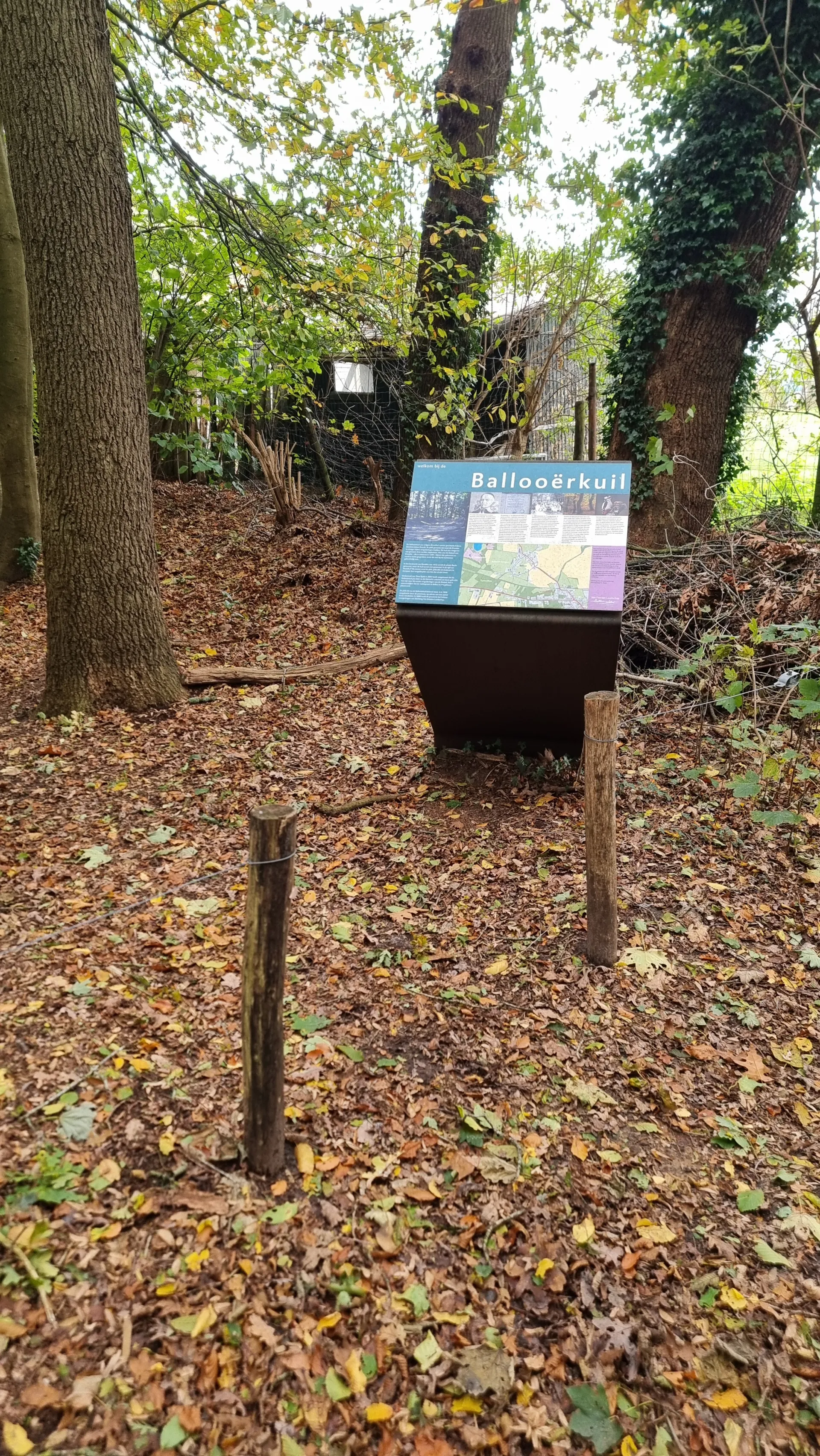
The Balloërkuil is a natural hollow in wind-blown sand, in a wood between Rolde and Balloo. Old oak trees surround the hollow, and an information board from Het Drentse Landschap stands at the entrance. The site became known for the story that people once gathered here to hold meetings and administer justice.
The Etstoel: a story, not an established fact
Historian and minister Johan Picardt described the hollow in 1660 as an old meeting place with earthen seats. He served as minister in Rolde from 1643 to 1648. According to tradition, the Etstoel, Drenthe’s highest court, also met here.
However, no convincing historical or archaeological evidence has been found for this. The information board refers to research by Theo Spek from 2004: the hollow is younger than the earliest meetings of the Etstoel and therefore cannot have been used for them. Drenthe’s Landrecht, a collection of laws from 1412, mentions the place Banlo but not the hollow. Identifying the Balloërkuil as a definite meeting place is therefore based on tradition.
A royal visit
The province of Drenthe bought the hollow and surrounding woodland in 1846 to preserve the site as a historical monument. In 1895, the fifteen-year-old Princess Wilhelmina and Queen Regent Emma visited the Balloërkuil after seeing the hunebedden, the prehistoric burial monuments at Rolde. Here they watched the outdoor play Bij klimmender Zonne, which re-enacted old Drenthe legal proceedings. The visit helped make the hollow better known. Het Drentse Landschap has managed the area since 2000.
Old oaks and woodpeckers
According to the information board, the shifting sands in which the hollow formed show that this site has not always been wooded. The old oaks were able to grow because they received plenty of sunlight as young trees. As the woodland becomes denser, young oaks have fewer opportunities to establish themselves. Beech trees grow more readily in the shade, so the oak woodland may gradually turn into beech woodland.
The board lists the great spotted woodpecker, lesser spotted woodpecker and green woodpecker as inhabitants of the woodland and surrounding area. The green woodpecker searches for ants on the ground, including in the hollow and on the adjacent railway embankment.
The coin hoard of 1839
On 20 April 1839, a Roman coin hoard was found east of the Balloërveld, in the valley of the Rolderdiep: 350 to 370 silver denarii. The most recent coin dates from around AD 180. After its discovery, the hoard was sold to two silversmiths in Assen.
Sources: the Het Drentse Landschap information board at the Balloërkuil, viewed on 27 October 2026, and Het Drentse Landschap’s description of the Balloërkuil.